Circuit-level and neuroendocrine mechanisms mediating brain–reproductive organ communication and emotional modulation of visceral health
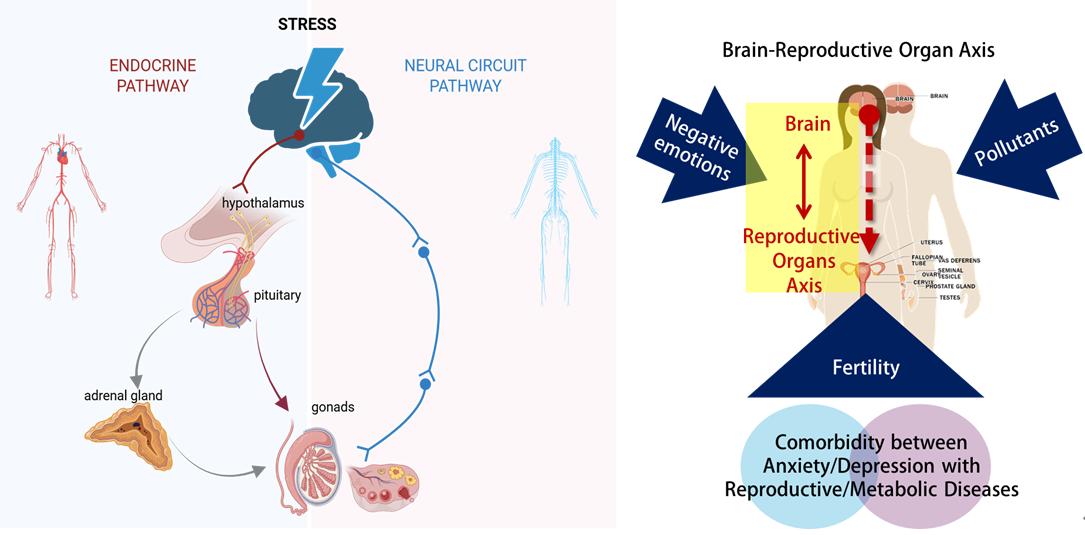
Circuit-level mechanisms underlying brain–reproductive organ communication.
Clinically integrated research on the comorbidity of affective disorders with reproductive and metabolic dysregulation.
Neural substrates of emotion-driven modulation of visceral function.
We aim to uncover how the brain regulates reproductive and metabolic physiology through emotion-sensitive neural circuits. Reproductive and visceral functions are not merely peripheral processes—they are tightly integrated with central brain states and are highly susceptible to emotional and environmental stressors. Disruptions in these brain–body interactions are increasingly recognized as key contributors to infertility, sexual dysfunction, and metabolic syndromes, particularly in patients with affective disorders.
Our research focuses on the circuit-level and neuroendocrine mechanisms that mediate brain–reproductive organ communication and emotional modulation of visceral health. Using viral circuit tracing, in vivo neural activity recording, hormonal assays, and behavioral analysis in rodent models, we dissect how affective brain states shape peripheral physiology. In parallel, we collaborate with clinicians in gynecology, andrology, and psychiatry to investigate how anxiety and depression co-occur with reproductive and metabolic dysregulation in clinical populations.
Recently, we have identified the locus coeruleus (LC) as a central integrative node within this brain–reproductive axis. LC neurons form multi-tiered neural connections with reproductive organs and are robustly activated under stress. Importantly, these neurons project to the spinal cord and release norepinephrine (NE), serving as a key neuromodulatory signal linking emotional arousal to autonomic and endocrine output. This discovery offers a promising entry point to understand how emotional stress is transduced into physiological dysfunction and provides a candidate target for intervention.
By bridging systems neuroscience with clinical relevance, we aim to define the core principles of emotion–viscera interaction and uncover novel therapeutic strategies for stress-related reproductive and metabolic disorders.